Home / Arts and Entertainment / Bayeux Tapestry's 1000-Year Mystery Solved!
Bayeux Tapestry's 1000-Year Mystery Solved!
15 Dec, 2025
Summary
- The Bayeux Tapestry was likely created for monks' mealtime reading.
- Professor Pohl suggests Canterbury's St Augustine's Abbey as origin.
- The tapestry may have been stored for decades before display.
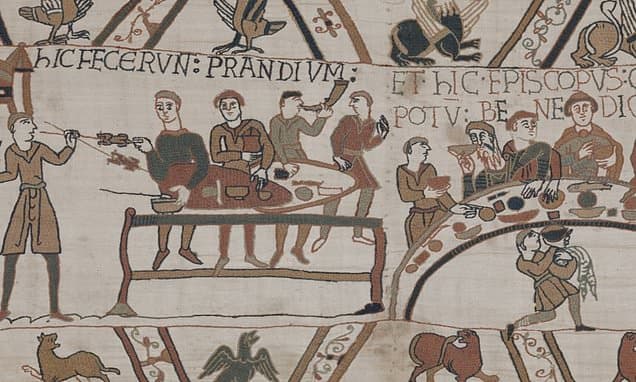
New research suggests the Bayeux Tapestry, a significant medieval artwork, was originally intended for display in the refectory of St Augustine's Abbey in Canterbury, England. Historian Professor Benjamin Pohl posits that the nearly 1,000-year-old masterpiece was designed to provide "mealtime reading" for monks, offering collective reflection and entertainment during meals.
While the tapestry's creation is often dated to the 1080s, possibly at St Augustine's Abbey by skilled embroideresses, its original purpose in England remained a mystery. Professor Pohl's theory indicates it may have been commissioned by Bishop Odo, William the Conqueror's half-brother, but could have been stored for up to 50 years if the refectory's construction was delayed, which indeed occurred.
The tapestry, a 230-foot-long linen embroidery, vividly recounts the events leading to the Norman Conquest of England. This latest hypothesis suggests a new understanding of its initial role, moving beyond its later documented existence in Bayeux Cathedral from 1476.