Home / Arts and Entertainment / Art Nouveau Master: Isle of Man's Knox Exhibition Ends
Art Nouveau Master: Isle of Man's Knox Exhibition Ends
28 Feb
Summary
- Archibald Knox, Art Nouveau designer, had major exhibition closing.
- His work for Liberty's 'Cymric' range was significant but unnamed.
- Knox's designs were inspired by Isle of Man's ancient crosses.
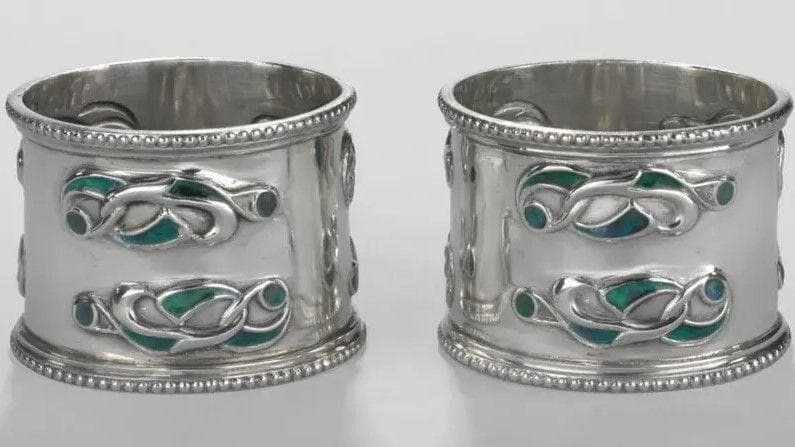
The Archibald Knox: Order & Beauty exhibition, showcasing around 200 pieces by the renowned Art Nouveau designer, is concluding at the Isle of Man's national museum. This year-long display, a collaboration by Manx National Heritage and the Archibald Knox Forum, has welcomed 60,000 visitors, drawing attention to Knox's unique artistic contributions.
Born on the Isle of Man in 1864, Knox developed his artistic talents locally before moving to London. He became associated with the Silver Studio and later with Liberty, a department store seeking a distinct British design identity. Knox was instrumental in creating the high-class homeware 'Cymric' range for Liberty between 1898 and 1906, producing approximately 4,000 pieces.
Despite his prolific output, Knox worked as a 'ghost designer,' with his name not attributed to his creations. The extent of his contribution to the 'Liberty style' was only uncovered decades after his death, starting in the 1960s. It is now understood that Knox designed 80% of the 'Cymric' product line, leading to calls to recognize it as 'Knox style' rather than 'Liberty style.'
Knox's designs were deeply influenced by his Manx heritage, particularly the island's ancient stone crosses, Celtic knotwork, and Viking stories. His education in art on the island was progressive, encouraging boldness and originality. This distinctive style led him to leave Liberty in 1906 when the company sought to shift its design direction.
Post-Liberty, Knox returned to the Isle of Man in 1913. He continued to teach and became a sought-after designer for local businesses. His most revered later work, the illuminated manuscript 'The Deer's Cry - St Patrick's Prayer,' synthesized elements from his earlier career, reflecting his spirituality and connection to the island. He passed away in 1933.
Manx National Heritage regards Knox as the island's most famous artistic export. While his designs are globally recognized, his personal 'Manx story' has often been overlooked. The exhibition's success has begun to bring this narrative to the forefront, ensuring that Knox's profound connection to the Isle of Man and his artistic innovations are celebrated.