Home / Arts and Entertainment / Arcade Fire's Neon Bible: A Worldly Roar
Arcade Fire's Neon Bible: A Worldly Roar
28 Sep
Summary
- Neon Bible mirrors societal issues with outward-looking, malevolent themes.
- The album refines Funeral's sound using economical means for greater scale.
- Regine Chassagne's vocals offer tentative hope against Win Butler's tension.
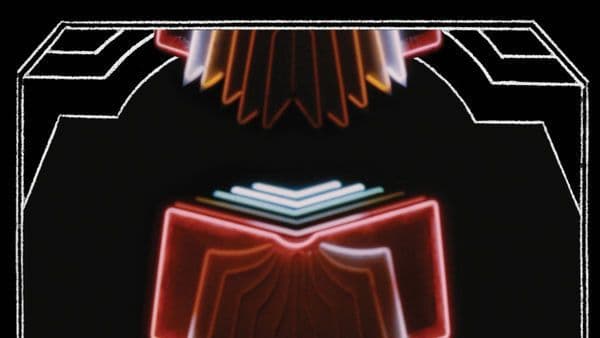
Arcade Fire's second album, "Neon Bible," marks a significant departure from its predecessor, "Funeral." This new work turns its gaze outward, addressing worldly concerns with a sound described as malevolent, angry, and paranoid, yet often empathetic. The band targets societal structures like government, the church, and the military, alongside the common man's base instincts.
The album's sonic evolution streamlines the raw sound of "Funeral" into a more economical yet equally grand scale. Driven by inventive guitar work and steady drumming, songs like "Black Mirror" and "Keep the Car Running" build tension through gradual crescendo rather than outright eruption. This approach emphasizes controlled forward momentum and measured release, a contrast to "Funeral's" catharsis.
A notable development is the more prominent role of Régine Chassagne, whose angelic soprano offers a tentative hopefulness that complements Win Butler's tense performances. Her contributions on tracks such as "(Antichrist Television Blues)" add a new layer to the band's aesthetic, which also shows influences from Bruce Springsteen alongside previous touchstones like David Bowie and David Byrne.
"Neon Bible" blends diverse styles freely, moving beyond the compartmentalization of influences. Tracks like "Ocean of Noise" incorporate samba rhythms, while "Bad Vibrations" fuses girl-group and new wave elements. This fusion of discipline and passion suggests the album will possess a long shelf-life.


