Home / Arts and Entertainment / 8,000-Year-Old Plaster Faces Reshape History
8,000-Year-Old Plaster Faces Reshape History
10 Jun
Summary
- Discovery of 22 plaster statues and busts from 7th-6th millennium BCE.
- Statues were deliberately buried, not discarded as rubbish.
- Craftsmanship shows sophisticated planning and community knowledge.
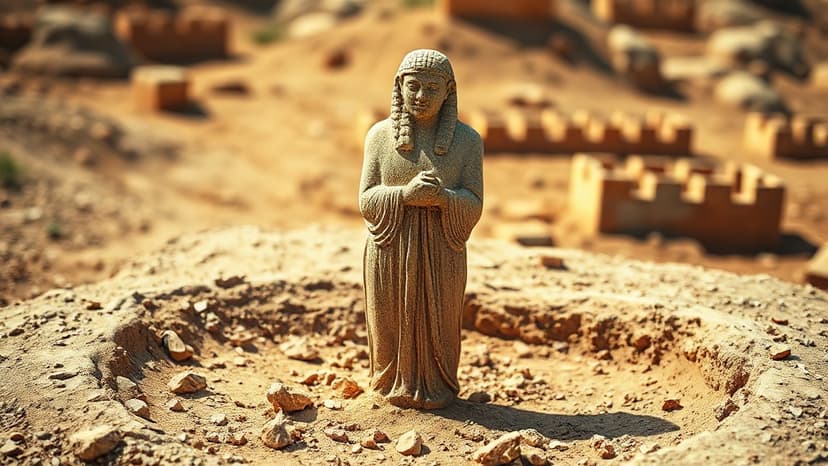
In 1983, construction work near Amman, Jordan, led to the discovery of 'Ain Ghazal, a major Pre-Pottery Neolithic settlement. Workers unearthed a pit containing numerous humanlike plaster faces and figures, dating to the 7th-6th millennium BCE, or 7,000-9,000 years ago. These artifacts were not discarded but deliberately buried in a cache within the occupied village.
Twenty-two plaster statues and busts were recovered from this intentional deposit, showcasing sophisticated craftsmanship. The artisans used lime plaster layered over reed bundles, demonstrating advanced techniques and shared community knowledge centuries before metallurgy became widespread. This artistic production hints at complex symbolic and ritualistic societies.
The 'Ain Ghazal findings complicate the traditional view of early villages as solely functional agricultural settlements. The discovery of a second cache in 1985 suggested these artistic creations were part of a broader cultural pattern. The statues, placed within a symbolic landscape, indicate early settled communities developed complex systems of ritual, memory, and shared belief.


