Home / Arts and Entertainment / Photography's Power: How One Woman Fought for Justice
Photography's Power: How One Woman Fought for Justice
19 Aug
Summary
- Alice Harris documented brutal atrocities in the Congo Free State.
- Her photographs exposed King Leopold II's rubber-quota system.
- Her work influenced international pressure leading to reforms.
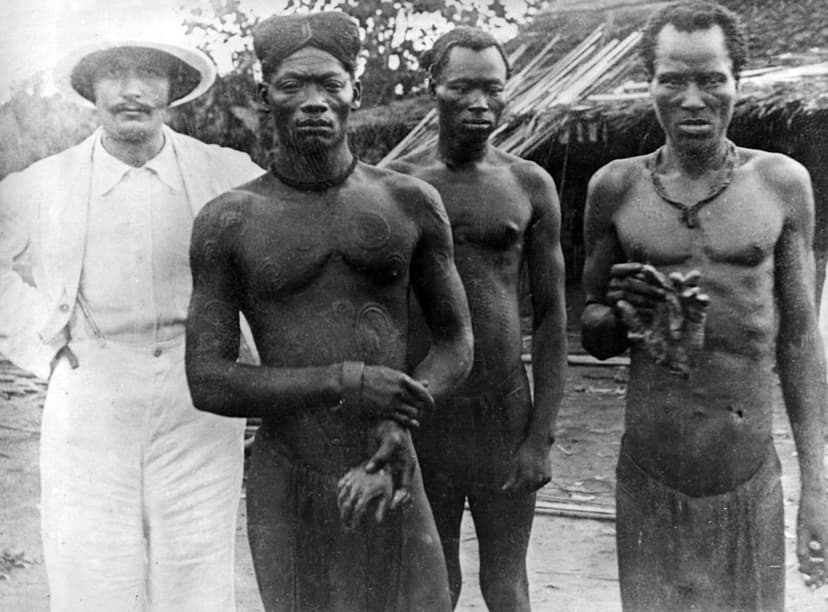
Alice Harris, a British missionary, pioneered the use of photography for advocacy decades before Lewis Hine. Sailing to the Congo Free State in 1898 with her husband, she encountered horrific brutality. Villages were forced to meet impossible rubber quotas, and soldiers punished failures by severing hands and feet.
Harris began documenting these atrocities, deliberately constructing images like one of a man with his daughter's severed hand and foot as evidence. Her compositions were powerful testaments designed to be undeniable. These striking photographs were widely distributed through pamphlets, satirical attacks, and lantern slide presentations across Britain and the United States.
By 1908, the international outcry fueled by Harris's images compelled King Leopold II to relinquish control of the Congo Free State to the Belgian state. However, her significant contributions were largely overlooked, with credit for the anti-slavery campaign often attributed to her husband, John Harris, while her name faded from historical records.
Recent exhibitions in London, Liverpool, and her hometown of Frome, Somerset, are finally bringing Alice Harris's legacy to light. Her hometown is currently hosting an exhibition, "Let's Talk About Alice," at the town museum, acknowledging her place in photographic history and her role in demonstrating photography's power to instigate government action.


